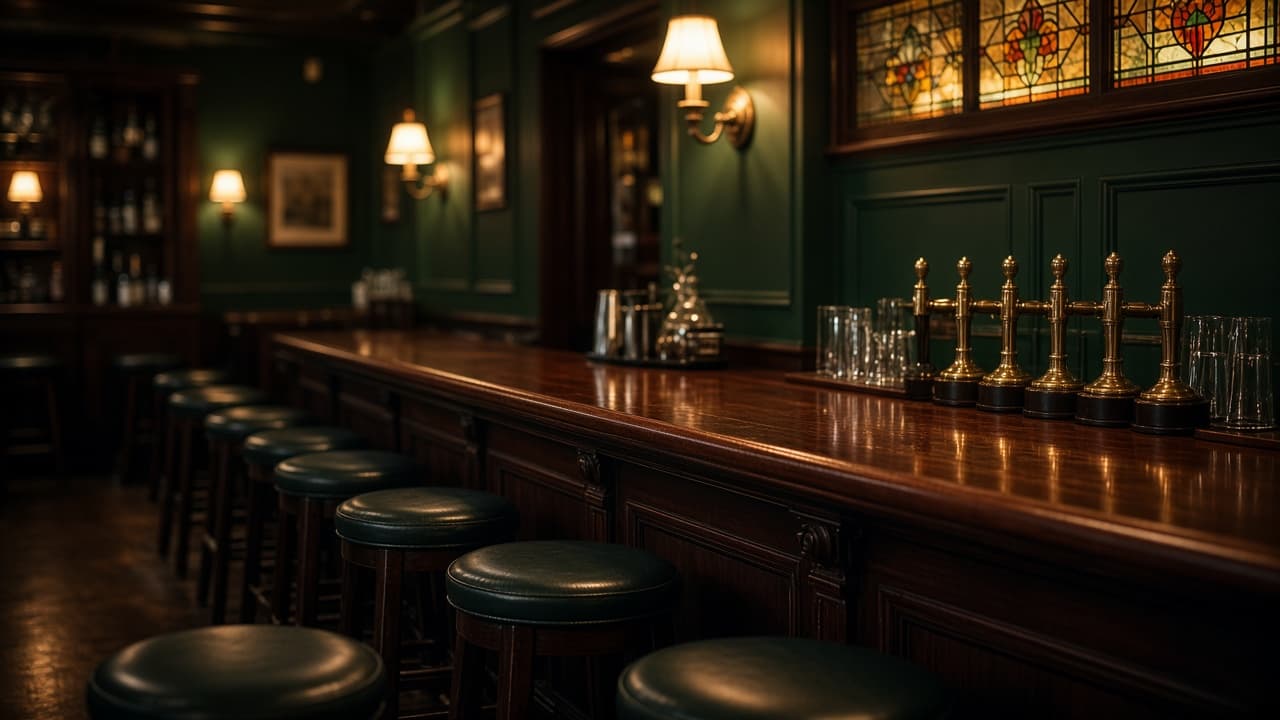
An Irish pub in Australia is a public room that tries to keep a particular kind of welcome: talk that can include a stranger, a pint that is poured as if it matters, food that can carry a long sit, and music that is treated as part of the furniture rather than as a show you bought a ticket for. People use the phrase for corner hotels with a harp in the window, for basement rooms with a session on a Tuesday, and for suburban bars that put a stout on tap and a stew on the board. The phrase is useful. It is also easy to cheapen. Green paint, a slogan over the door and a plastic hat on 17 March do not make a room Irish. The test sits in how the place behaves when it is ordinary.
This site is a guide to that ordinary behaviour. It is written for people who want to walk into a room and know what they are looking at, for visitors who have heard that Australian cities keep Irish pubs, and for hosts who are trying to plan a birthday, a rehearsal dinner or a wake without turning the night into a performance. It is not a venue. It does not take bookings. It does not publish rankings, awards, prices or a calendar of gigs. Those things go stale and they tempt invention. What lasts is culture: how a pint is poured, how a session is joined, how a feast day is marked, and how a gathering is kept decent.
What people usually mean
When someone in Australia says they are going to an Irish pub, they usually mean a room that borrows from the public house as it is understood in Ireland: a counter you can stand at, seats that face other people, drink that includes stout and whiskey, and a sense that the night can run on conversation. The Australian hotel already had some of that. The Irish layer adds a repertoire — stew and soda bread, a two-stage stout pour, tunes in the corner, sport from home on a quiet afternoon — and a habit of treating the visitor as if they might stay.
Rooms differ. A city basement can feel close and loud. A country hotel can feel like a dining room that happens to have a tap. A suburban room can be a sports bar six nights a week and an Irish room on the seventh. None of those shapes is fake by default. They become thin only when the cues are all costume and the welcome is all sale. If the staff have time to finish a pour, if the menu has at least one plate that belongs to the tradition, and if people can sit without being hurried, you are closer to the thing than any list of decorations can tell you.
Irish Australia is older than any one room. The National Museum of Australia and state libraries hold the long record of Irish migration — convict, famine, assisted, professional — and of the societies, parishes and sporting clubs that followed. Pubs were one of the public rooms in that story, alongside churches, halls and the Gaelic field. A modern guide should not pretend that every room with a shamrock is a chapter of that history. It should also not pretend the history is irrelevant. People still gather after funerals. People still want a tune they recognise. People still ask for a pint that looks as it does in the photographs they grew up with.
How to use the guides
Start with Irish pubs in Australia if you want the cultural question answered in full: what the phrase means, how to read a room, and what courtesy looks like at the bar. Open St Patrick's Day if you are trying to keep 17 March as a feast rather than as a blur. Use Irish food and drink for stew, soda bread and the stout pour. Use live music and sessions before you sit down with an instrument, or before you talk through a set. Use functions and gatherings when you are the person who has to ask for a room.
Each guide leads with the direct answer. That is deliberate. Search and conversation both reward the first true sentence. The rest of the page then does the slower work: distinctions, habits, cautions, and the official names worth knowing. Where a fact belongs to a public body, the guide names that body. The National Health and Medical Research Council writes the Australian guidelines on alcohol. DrinkWise Australia publishes plain advice on moderation. State liquor regulators set responsible service. Tourism bodies in Ireland describe foodways and music as living culture, not as a museum set. This site stays inside those rails.
What you will not find here
You will not find a list of the best rooms. “Best” is a ranking, and rankings want numbers that this desk will not invent. You will not find tonight’s specials, a DJ sheet, or a named operator. You will not find a price for a pint or a function room. Those figures change, and repeating an old one is a way of lying. You will not find a quote attributed to a publican or a musician unless it sits in a public institutional source that can be named. Informal colour is easy to fake. This guide refuses that ease.
You will also not find a booking form dressed up as culture. The contact page writes to an editorial desk. If you need a table, a wake room or a band, you speak to the place you have in mind, or to a host you already trust. The guides exist to help you ask better questions when you get there.
A note on drink
Alcohol sits near the centre of pub culture and it is also a public health matter. The legal drinking age in Australia is 18. The responsible habit is to eat, to drink slowly, to keep water on the table, and to plan a way home that does not involve driving. Pregnancy, medication, some jobs and some medical histories ask for no alcohol at all. If a room is pushing drink harder than food, music or talk, it is a poorer version of the tradition, not a truer one. St Patrick's Day does not suspend that.
If you want the long versions of the first questions people type — what makes a pub Irish, how the feast day is marked here, what the food is, how a stout is poured, how a session is joined, how a wake is planned — they sit in the guides and again at the foot of this page. Read them as answers, then walk in with your own judgement. A good room will meet you halfway.